

 Jane
Jane

Apple’s latest innovations in camera technology continue to draw attention from content creators, filmmakers, and everyday smartphone users. Among these advances, Apple’s evolving sensor-shift design stands out as a key improvement that addresses one of the most common challenges in mobile video capture: maintaining stable focus while shooting handheld. What began as a hardware solution to reduce camera shake in still photography has developed into a sophisticated system that plays a central role in video clarity, focus consistency, and overall image quality.
Recent reviews and hands-on reports highlight how Apple’s sensor shift approach has matured into a cornerstone of its video strategy. By combining physical stabilization with advanced computational processing, Apple has positioned its iPhones as reliable tools for handheld video, even in situations that previously required external stabilizers or professional cameras. This expanded overview explores how the technology works, why it matters for video creators, and how it compares to other stabilization systems shaping the mobile imaging landscape.
Understanding Apple’s Sensor Shift Technology
Sensor shift stabilization works by physically moving the camera’s image sensor to counteract motion. Unlike traditional optical image stabilization, which relies on shifting lens elements, sensor shift corrects movement directly at the sensor level. This allows the camera to compensate for a wider range of motion, including vertical, horizontal, and rotational movements, which are common when filming handheld video.
In professional mirrorless and cinema cameras, this approach is known as in-body image stabilization. Apple adapted this concept for smartphones by engineering extremely precise actuators that move the sensor thousands of times per second within a compact camera module. The result is a stabilization method that reacts quickly to real-world motion, helping keep footage sharp and properly focused even when the user’s hands are not perfectly steady.
Apple first introduced sensor shift technology on select iPhone models, beginning with the iPhone 12 Pro Max. At the time, it was positioned as a premium feature designed to improve low-light photography and video. Since then, Apple has expanded sensor shift across more models and refined how it works alongside autofocus, exposure control, and image processing. Each new generation has brought incremental improvements in responsiveness, precision, and integration through software-based enhancements.

How Sensor Shift Enhances Video Stability And Focus
The core goal of Apple’s sensor shift design is not only to smooth out visible shake but also to support stable focus during motion. In handheld video, camera shake and focus instability often go hand in hand. Even small movements can cause focus shifts, micro blur, or visible jitter, especially when recording at high resolutions or using telephoto lenses.
Sensor shift addresses this by actively compensating for motion before it disrupts the image. Motion sensors detect movement in real time, and the system adjusts the sensor’s position to counteract that movement. Because this correction happens at the hardware level, it reduces the workload on software stabilization and autofocus systems.
Recent refinements place greater emphasis on maintaining consistent focus during dynamic movement. For example, when walking while filming a subject, the camera must manage forward motion, side-to-side sway, and slight rotational movement. At the same time, autofocus must continuously track the subject without hunting or drifting. Apple’s latest sensor-shift implementation provides a more stable foundation for autofocus, enabling it to lock onto subjects more reliably and transition between focal points more smoothly.
This improvement is particularly noticeable in scenarios such as vlogging, street videography, and event coverage, where handheld shooting is the norm and conditions can change quickly.
Apple’s Latest Implementation in 2025 iPhone Models
In 2025, Apple refreshed its iPhone lineup with models that further showcase the evolution of sensor shift technology. Devices such as the iPhone 17, iPhone 17 Pro, iPhone 17 Pro Max, and the newly introduced iPhone Air feature camera systems designed for video performance.
The Pro models received the most significant upgrades. Reviews describe a redesigned camera platform that accommodates larger sensors, improved optics, and more advanced stabilization hardware. The telephoto camera, in particular, benefits from enhanced sensor shift capabilities that operate across multiple axes. This allows for more stable footage at higher zoom levels, an area where handheld video has traditionally struggled.
Larger sensors also contribute to improved stabilization effectiveness. With more surface area and improved light-gathering, the sensor-shift system offers greater flexibility to correct motion without compromising image quality. Combined with Apple’s latest image processing pipeline, this results in clearer video, reduced rolling shutter artifacts, and more consistent focus tracking.
The iPhone Air, while positioned as a lighter, more accessible option, still features sensor-shift optical image stabilization. Apple highlights its ability to record smooth 4K video at high frame rates while maintaining focus and clarity in a variety of lighting conditions. This demonstrates how sensor shift is no longer limited to top-tier models but is becoming a standard component of Apple’s video-focused design philosophy.
Real World Benefits For Video Creators
The practical advantages of Apple’s sensor shift design are most apparent when shooting handheld video in everyday situations. Reviews and user feedback consistently point to several key benefits.
Smoother Handheld Footage
Many smartphones rely on a combination of optical and electronic stabilization. While effective, these systems often require aggressive cropping or heavy software correction. Sensor shift adds a physical layer of stabilization, reducing motion at the source. This leads to footage that looks smoother and more natural, with fewer artifacts and less reliance on post-production stabilization.
For creators who film while walking, panning, or following subjects, this improvement can significantly improve overall video quality.
Improved Low Light Video Performance
Low light conditions amplify the effects of camera shake, especially in video. Sensor shift stabilization allows the camera to use slower shutter speeds without introducing excessive blur. This results in brighter, cleaner footage with better detail retention.
Filmmakers shooting indoors, at night, or in mixed-light environments benefit from this added stability, particularly when external lighting is unavailable.
More Reliable Focus Tracking
Maintaining focus during movement is one of the most challenging aspects of mobile video. Apple’s updated sensor shift design supports autofocus by minimizing unintended motion, helping the camera maintain focus on subjects even during complex movements.
This is especially useful for action shots, live events, interviews on the move, and social media content where consistent focus contributes to a more professional look.
Seamless Integration With Computational Photography
Apple’s camera systems rely heavily on computational processing. Features such as the Photonic Engine, advanced autofocus algorithms, and real-time noise reduction work in tandem with sensor-shift hardware. By stabilizing the image at the sensor level, these algorithms can operate more effectively, improving overall video clarity, color accuracy, and focus precision.
Comparing Sensor Shift With Other Stabilization Systems
To understand the value of sensor shift, it helps to compare it with other common stabilization methods.
Optical Image Stabilization
Optical image stabilization works by moving lens elements to counteract shake. It is effective for certain types of motion but can be limited when dealing with rotational movement or complex motion patterns. Sensor shift expands stabilization capabilities by addressing motion directly at the sensor.
Electronic Image Stabilization
Electronic stabilization uses software to analyze motion and adjust video frames accordingly. While powerful, it often requires cropping the image, which can reduce the field of view and image quality. Sensor shift reduces the need for aggressive electronic correction, preserving more of the original frame.
Hybrid Stabilization Systems
Modern smartphones increasingly rely on hybrid systems that combine optical, sensor shift, and electronic stabilization. Apple’s approach fits into this category, using sensor shift as a foundational layer that enhances the effectiveness of both optical and software-based techniques.
Recommended Devices And Accessories For Creators
While Apple’s sensor shift technology significantly improves handheld video, additional tools can further enhance results.
Smartphones With Strong Sensor Shift Support
- Apple iPhone 17 Pro and iPhone 17 Pro Max: These models offer the most advanced stabilization and focus capabilities in Apple’s lineup, making them well-suited for serious video creators.
- Apple iPhone Air 2025: A lighter, more affordable option that still delivers strong video stabilization and focus performance.
- Apple iPhone 16 Pro Max: A previous-generation flagship that remains a capable choice for high-quality handheld video.
Stabilization Accessories
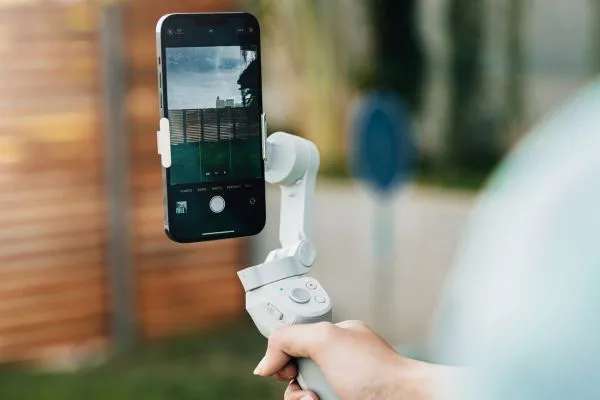
- Portable Gimbals: Compact gimbals such as the DJI RS 3 Mini or Zhiyun Crane M3 add an extra layer of motion control for cinematic movement and longer takes.
- Tripods With Fluid Heads: Ideal for interviews, product videos, and controlled camera movements, especially when paired with sensor shift stabilization.
- Clip-On Lenses And Filters: These accessories expand creative possibilities while relying on sensor shift to maintain clarity and focus.
What Critics And Reviews Are Saying
Recent reviews consistently praise Apple’s sensor shift stabilization for its effectiveness in real-world use. Testers highlight smooth handheld footage, improved low-light performance, and reduced reliance on heavy electronic stabilization. Many note that video retains a wider field of view and more natural motion than systems that rely heavily on software correction.
Some critiques focus on processing choices, such as noise reduction or sharpening preferences, which can vary depending on lighting and shooting conditions. These observations underline the importance of balancing hardware capabilities with software tuning. Overall, reviewers agree that sensor shift plays a crucial role in elevating Apple’s video performance.

The Future Of Stabilization In Mobile Video
As smartphone cameras continue to advance, sensor shift technology is expected to become even more integral to mobile video capture. Apple’s steady refinement suggests a long-term commitment to improving handheld video through both hardware innovation and computational photography.
Future developments may include tighter integration between sensor shift, depth sensing, and real-time subject tracking. As these systems evolve, the gap between smartphone video and dedicated cameras is likely to continue narrowing.
The Role Of Sensor Shift In Modern Mobile Videography
Apple’s new sensor-shift design represents a significant step toward stable focus and smooth handheld video. By addressing motion at the sensor level and integrating closely with advanced processing features, Apple has created a system that delivers tangible benefits for creators and everyday users alike.
From smoother footage and better low-light performance to more reliable focus tracking, sensor shift has become a defining feature of Apple’s camera strategy. As mobile video continues to grow in importance, this technology positions Apple’s devices as capable tools for capturing high-quality video in real-world conditions, without the need for complex setups or additional equipment.